
5 Cutting‑Edge Diagnostics That Catch Cancer Early
She came in for what she described as a routine visit. Mid-fifties, vibrant, the kind of woman who schedules her annual labs the way other people schedule vacations — deliberately, and well in advance. She had no symptoms. No family history that alarmed her. She simply wanted to know, as she put it, that she was doing everything possible.
We ran a comprehensive early detection panel. Three weeks later, we were sitting across from each other reviewing a finding that neither of us had expected — a signal consistent with early-stage ovarian cancer, caught at a moment when it was still entirely treatable. Her surgical team later confirmed what the test had suggested. She is doing beautifully now.
That conversation changed the way I think about prevention. Not because early detection is new — it isn't — but because what we are now capable of detecting, how early we can detect it, and how precisely we can act on that information has fundamentally shifted. The tools available today bear little resemblance to what medicine offered even a decade ago.
Cancer remains one of the leading causes of death in the United States, yet many cancers are highly survivable when caught at an early stage. The tragedy is not that we lack effective treatments. The tragedy is that too many diagnoses arrive too late. Standard screening protocols — mammograms, colonoscopies, PSA tests — are valuable, but they are also incomplete. They address a limited number of cancer types and they miss a great deal.
For patients committed to proactive, precision-driven health, a more sophisticated approach exists. Here are the five diagnostics I consider most important in the landscape of early cancer detection today.
1. Multi-Cancer Early Detection Blood Tests
Perhaps the most significant development in oncology screening over the past several years is the emergence of multi-cancer early detection tests — a category of liquid biopsy that can screen for dozens of cancer types from a single blood draw.
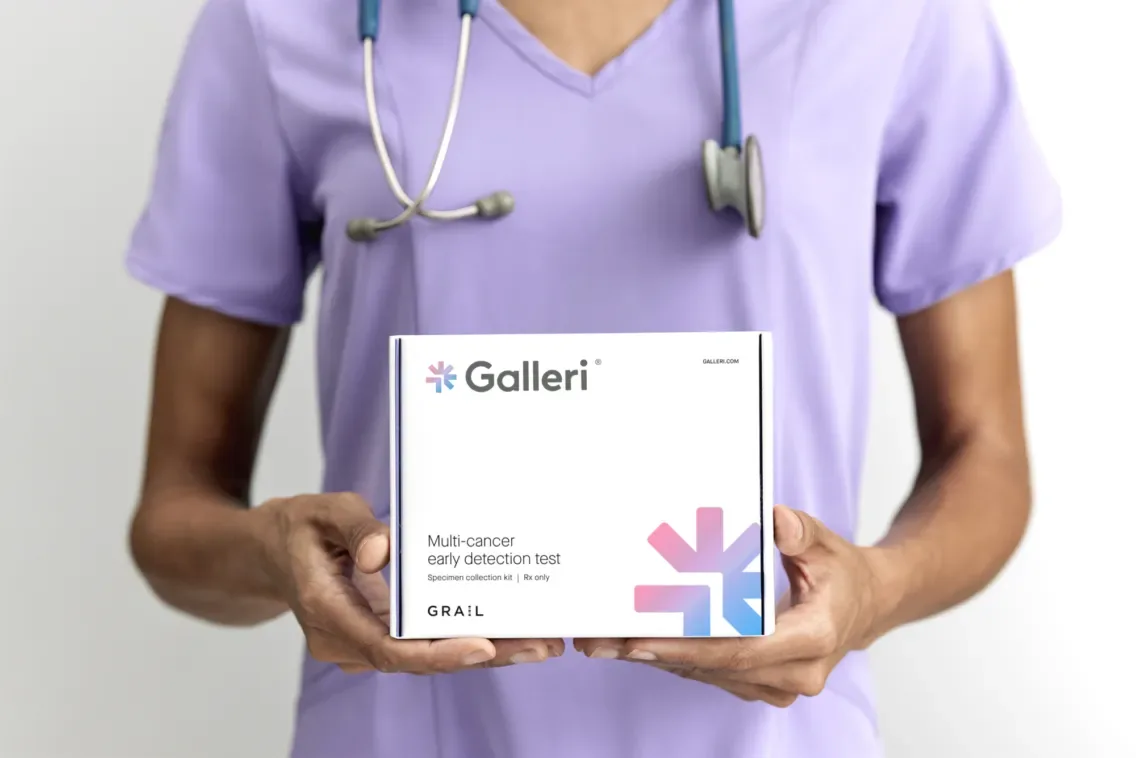
The leading platform in this space is Galleri, developed by GRAIL. It works by analyzing cell-free DNA shed by tumors into the bloodstream, detecting abnormal methylation patterns that signal the presence of cancer. What distinguishes it from traditional screening is its scope. A single test can screen for more than fifty types of cancer — the majority of which have no standard recommended screening protocol at all. Cancers of the pancreas, ovary, liver, and esophagus, which are notoriously difficult to detect early, fall within its reach.
This matters enormously because many of the deadliest cancers are fatal precisely because they are asymptomatic until late stage. Multi-cancer early detection tests shift that calculus. They introduce the possibility of catching a pancreatic cancer or an ovarian malignancy at a point when surgery alone may be curative, rather than at stage three or four when treatment options narrow considerably.
For patients over forty, or for those with elevated risk due to genetics, lifestyle, or family history, I consider this test one of the most meaningful additions to an annual prevention protocol available today.
2. Liquid Biopsy for Circulating Tumor DNA
Circulating tumor DNA, or ctDNA, testing is a more targeted form of liquid biopsy that analyzes fragments of tumor-derived genetic material circulating in the bloodstream. Where multi-cancer detection tests cast a wide net, ctDNA panels can offer deeper molecular insight — particularly useful when there is an existing diagnosis, a known genetic risk, or a prior cancer history requiring surveillance.
For patients who have completed cancer treatment, ctDNA testing can detect minimal residual disease — microscopic evidence that cancer cells remain — long before a recurrence becomes visible on imaging. This transforms the follow-up conversation. Rather than waiting and watching, we can monitor molecular signals in real time and intervene earlier if the biology warrants it.
For high-risk patients without a prior diagnosis, ctDNA testing adds a layer of molecular surveillance that complements broader screening. Think of it as listening to a conversation happening at the cellular level — one that may be broadcasting important information years before any scan would reveal it.
The technology is advancing rapidly, and the sensitivity of these tests continues to improve. What was a research tool five years ago is now a meaningful clinical option, and it is one I integrate selectively into the care of patients with elevated risk profiles.
3. Whole Body MRI with AI Analysis
Imaging has always been a cornerstone of cancer detection, but traditional imaging is reactive — ordered when a symptom appears or a finding is suspected. Whole body MRI used as a proactive screening tool represents a different philosophy entirely.
A single session can evaluate the brain, spine, chest, abdomen, and pelvis without radiation exposure. When interpreted by an experienced radiologist and enhanced by artificial intelligence trained to identify subtle tissue changes, it offers a remarkably comprehensive look at what is happening inside the body at a given point in time.
Companies such as Prenuvo have made this type of screening accessible outside of the hospital system. In a single appointment, we can survey organs, soft tissues, and lymph nodes for masses, lesions, or structural abnormalities that would otherwise go undetected. I have seen patients walk in asymptomatic and walk out with findings that led to early-stage kidney tumors, liver lesions, and even early spinal abnormalities — all identified before any clinical symptom appeared.
Whole body MRI is not appropriate as a replacement for tissue-based diagnostics, and not every finding leads to an intervention. Some findings require monitoring rather than immediate action. But for patients who want a thorough structural survey of their body and are willing to engage thoughtfully with what it reveals, it is one of the most powerful tools in a comprehensive longevity protocol.
4. Advanced Genomic Risk Profiling
Understanding what a person's biology is predisposed toward is a different kind of early detection — one that operates not on what the body is currently doing, but on what it may be inclined to do given its genetic architecture.
Genomic panels that analyze hereditary cancer risk genes have expanded well beyond BRCA1 and BRCA2. Today, comprehensive hereditary cancer panels evaluate dozens of genes associated with elevated risk for breast, ovarian, colorectal, pancreatic, endometrial, prostate, and gastric cancers, among others. Genes such as PALB2, ATM, CHEK2, MLH1, MSH2, and BRIP1 carry meaningful clinical implications that most patients have never been tested for.
When I identify a significant hereditary risk variant, it changes everything. Screening intervals become more frequent. Imaging modalities change. Chemoprevention becomes a conversation worth having. Surgical risk-reduction strategies may enter the picture. Family members can be counseled and tested. The entire trajectory of a patient's preventive care is recalibrated around information that is specific to their biology.
Critically, a negative family history does not eliminate hereditary risk. Many gene mutations occur de novo, meaning there is no prior family history to prompt suspicion. For patients who have never undergone comprehensive hereditary cancer testing, it remains one of the highest-yield conversations we can have.
5. Low-Dose CT for Lung Cancer Screening
Lung cancer remains the leading cause of cancer death in the United States — and it is also one of the most survivable cancers when caught at stage one. The challenge is that it rarely announces itself early. By the time symptoms appear, the disease has often progressed significantly.
Low-dose CT of the chest is the only imaging-based screening tool with demonstrated mortality reduction for lung cancer. Current guidelines recommend annual screening for adults between fifty and eighty who have a significant smoking history, but emerging research suggests the eligible population may be broader. Patients with occupational exposures to asbestos, radon, or other carcinogens, as well as non-smokers with certain genetic risk profiles, may also benefit from surveillance.
What I find remarkable about this test is how underutilized it remains. Despite strong evidence and guideline support, screening rates in eligible populations are far lower than they should be. In a precision medicine practice, part of my role is ensuring that patients who qualify for this screening are actually receiving it — and understanding why it matters.
A five-millimeter nodule identified on a low-dose CT can be monitored, biopsied, and treated in a window when surgery alone is often curative. That same nodule, discovered two years later when it has grown and spread, may require chemotherapy, radiation, and immunotherapy — with far less certainty about the outcome.
Building a Prevention Strategy That Matches Your Risk
None of these tools operate in isolation. The most effective early detection strategy is one that is designed around an individual — their genetics, their personal and family history, their environmental exposures, their age, and their values.
A forty-five-year-old woman with a BRCA2 variant and a mother who had ovarian cancer at sixty requires a very different surveillance plan than a fifty-year-old man with a heavy smoking history and a decade of occupational chemical exposure. Precision medicine means precisely that — building a protocol that fits the person sitting in front of me, not a population average.
In my practice, I begin with a thorough risk assessment. We look at genomics, family history, inflammatory markers, metabolic health, and lifestyle factors. From there, we layer in the appropriate diagnostics — not everything at once, but thoughtfully, in an order and at a frequency that reflects where the risk actually lives.
The Conversation Worth Having
Early detection is not about fear. That is something I want to say clearly. The patients who pursue these diagnostics are not anxious — or at least, they are not driven by anxiety. They are driven by a desire for clarity. They understand that information, even difficult information, creates options. And options are what allow us to act rather than simply react.
The woman I mentioned at the beginning of this post does not regret the test that found her cancer. She is grateful for it every single day. What she had was not bad luck followed by bad news. What she had was the opportunity to intervene at exactly the right moment — because she asked the right questions and had access to the right tools.
That opportunity is available to more people than ever before. The science is ready. The question is whether you are ready to use it.
If you are interested in building a personalized early cancer detection strategy, I invite you to start a conversation with our practice. This is precisely the kind of medicine we are here for.
Disclaimer: The information provided on this website, including blog posts, is for general educational and informational purposes only and is not intended as medical advice. As a board-certified physician, I aim to share insights based on clinical experience and current medical knowledge. However, this content should not be used as a substitute for individualized medical care, diagnosis, or treatment. Always consult your own healthcare provider before making any changes to your health, medications, or lifestyle. Modern Human MD and its affiliates disclaim any liability for loss, injury, or damage resulting from reliance on the information presented here.